
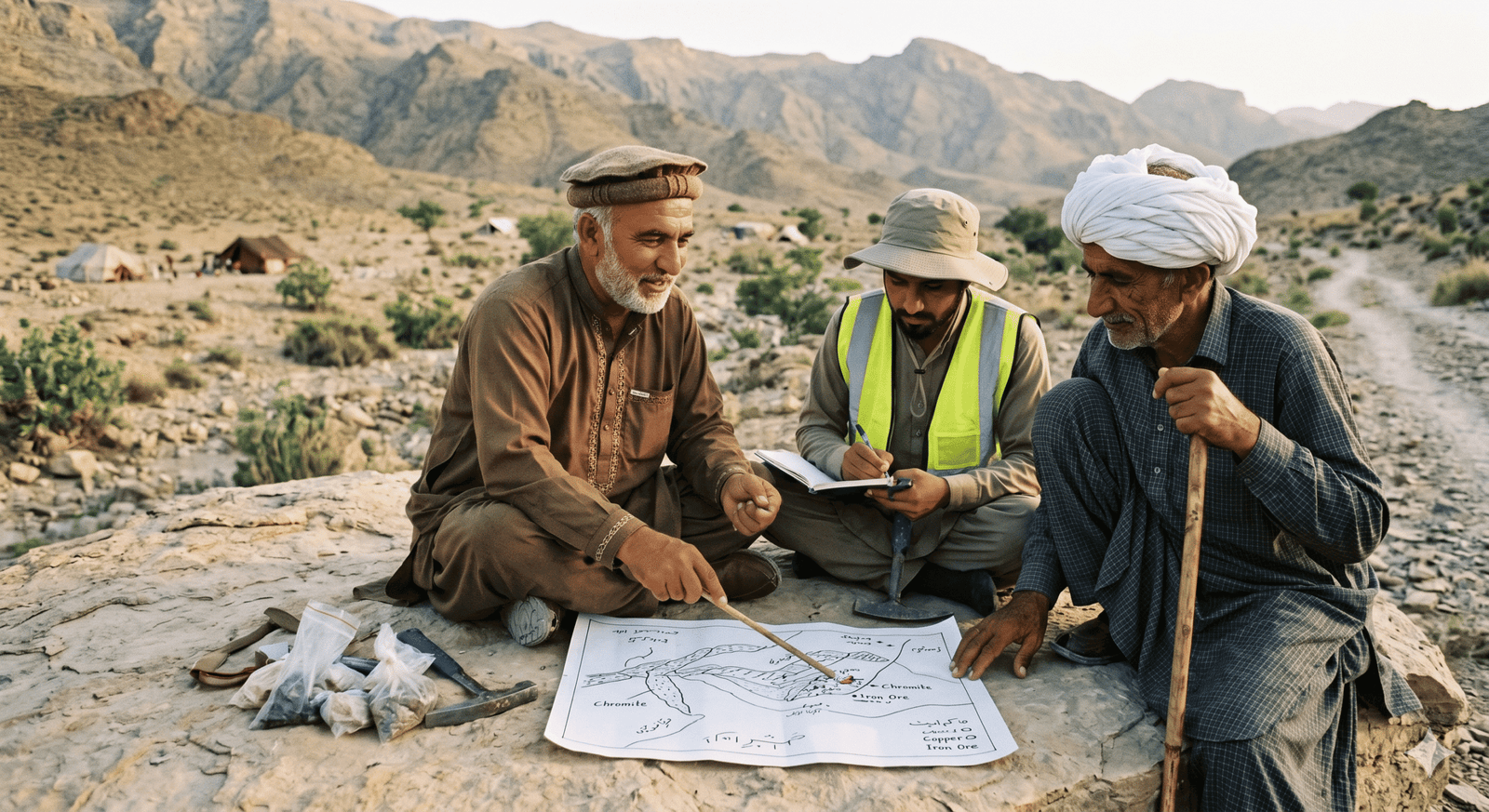
Balochistan is often described as Pakistan’s frontier province—a land of sweeping deserts, stark mountains, and sparse populations. Yet, from a geological standpoint, it is one of the most intensely mineralized zones on earth.
By mapping the subterranean formations across its rugged landscape, geologists have identified dozens of high-value commodities waiting to be fully tapped. As global demand for technology metals and clean energy infrastructure skyrockets, Balochistan is transitioning from a remote borderland into a crucial focal point for international resource development.
The Chagai Magmatic Belt: Copper and Gold Frontier
The centerpiece of Balochistan’s metallic wealth sits in the northwest, along an ancient volcanic arc that runs through the Chagai District. This unique geological setup created massive porphyry systems, which hold world-class concentrations of copper and precious metals.
- The Reko Diq Complex: Standing as one of the largest undeveloped copper-gold deposits on the globe, Reko Diq contains billions of tons of minable ore. Its development represents a massive shift for the regional economy, with multi-billion-dollar investments aimed at turning this desert site into a modern, long-term mining operation.
- The Saindak Project: For decades, Saindak has served as the operational testing ground for metallurgy in the province. It houses complete infrastructure for mining, crushing, and smelting copper blister, proving that large-scale industrial extraction is entirely possible despite the harsh desert climate.
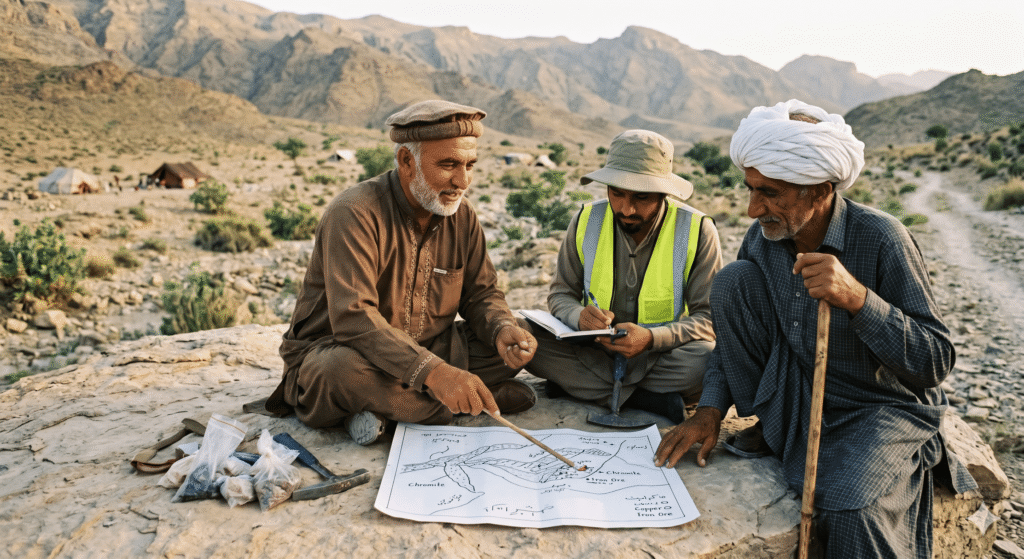
Industrial Minerals: The Backbone of Manufacturing
Beyond the headlines of gold and copper, Balochistan supplies essential raw materials that feed heavy industries, construction, and chemical manufacturing both domestically and abroad.
1. High-Grade Chromite
Concentrated heavily around the Muslimbagh and Zhob areas, Balochistan’s chromite is prized for its high metallurgical grade. Chromite is an indispensable ingredient in making stainless steel, superalloys, and chemical refractories.
2. Lead and Zinc Sediments
The sedimentary basins of Lasbela and Khuzdar host extensive lead-zinc deposits, most notably at the Duddar mine. These metals are critical for modern battery production, rust-proofing steel, and electronic manufacturing.
3. Decorative Stone and Marble
The mountains of Loralai, Chagai, and Khuzdar yield a stunning array of marble, granite, and onyx. Known for its distinct veins and deep colors, this stone is quarried extensively for upscale architecture and high-end construction material.
4. Barite and Gypsum
Large sedimentary deposits provide the raw materials needed for oil drilling muds (barite) and cement production (gypsum), serving as quiet but vital pillars for regional energy and infrastructure sectors.
The Hydrocarbon Heritage
Balochistan also holds a historic place in South Asia’s energy landscape. The discovery of the massive Sui Gas Field in the mid-20th century provided the foundational energy source that fueled Pakistan’s post-independence industrial growth. While those legacy fields are maturing, the province still holds substantial untapped natural gas potential, alongside vast coal reserves in areas like Harnai and Dukki that continue to fuel power generation and brick production across the country.
Modernizing the Extraction Landscape
To truly benefit from this geological lottery, the approach to mining in Balochistan is undergoing a necessary evolution. Moving away from rudimentary, hazardous extraction methods toward structured corporate operations brings several clear benefits:
- Localized Prosperity: Modern contracts are increasingly written to ensure a direct share of revenues stays within the province, funding local schools, clean water projects, and health clinics.
- Technological Upgrades: Shifting from raw material export to domestic processing adds immense value, creating higher-skilled jobs for local engineers and technicians.
- Environmental Preservation: In an arid landscape where water is more precious than gold, implementing dry-stack tailings and advanced water recycling is non-negotiable for long-term ecological balance.
Balochistan’s terrain may appear unforgiving on the surface, but its true value lies in its depth. With transparent policies, modern infrastructure, and a focus on community equity, the province is well on its way to turning its rugged hills into an engine for sustainable economic growth.
